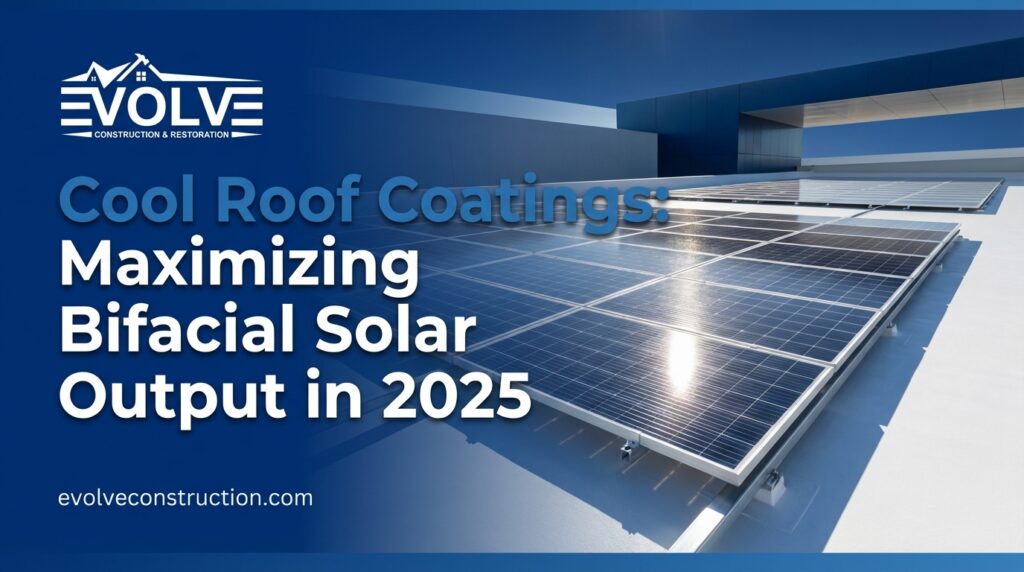
Cool Roof Coatings: Maximizing Bifacial Solar Output in 2025
In 2025, the solar energy landscape has shifted from simply capturing direct sunlight to squeezing every possible photon out of the environment. At the center of this revolution is the synergy between bifacial solar panels and advanced cool roof coatings. While traditional solar installations focus solely on the top side of the module, bifacial technology allows for energy generation from both the front and the rear. However, the efficiency of the rear side is entirely dependent on the surface beneath it. This is where high-albedo cool roof coatings become the ultimate performance multiplier for commercial and residential properties alike.
Homeowners and property managers are increasingly searching for ways to lower their Levelized Cost of Energy (LCOE) while increasing the lifespan of their roofing assets. The combination of a reflective roof and bifacial PV modules is no longer a niche luxury; it is the 2025 gold standard for sustainable building. By reflecting sunlight that would otherwise be absorbed as heat, cool roof coatings provide the diffuse and specular reflection necessary to activate the rear cells of bifacial modules, often increasing total energy yield by double digits.
This guide explores the technical, economic, and environmental reasons why integrating cool roof coatings with bifacial solar is the most significant upgrade you can make to your property this year. From the physics of the Solar Reflectance Index (SRI) to the latest in nanotechnology-driven coatings, we provide a comprehensive deep dive into maximizing your renewable energy investment while ensuring total project transparency and security.
1. The 2025 Synergy of Cool Roofs and Bifacial Solar
The primary driver of solar innovation in 2025 is the widespread adoption of bifacial PV modules. Unlike traditional monofacial panels, bifacial modules feature solar cells on both sides, protected by glass or clear backsheets. To maximize the output of these systems, the roof surface must act as a mirror. Cool roof coatings: Maximizing Bifacial Solar Output in 2025 is not just a trend; it is a technical necessity for those using N-type TOPCon or HJT (Heterojunction Technology) cells, which have higher bifaciality factors than older PERC technology.
When a bifacial panel is installed over a dark, non-reflective roof (like standard modified bitumen or dark shingles), the rear side produces negligible energy because the surface absorbs nearly all the light. In contrast, applying a high-solids silicone or acrylic cool roof coating transforms that surface into a high-albedo environment. This synergy ensures that the light passing between the panels or rows is bounced back onto the underside of the modules, effectively turning the entire roof footprint into an active energy-harvesting zone.
The Evolution of Bifaciality Factors
In previous years, the bifaciality factor—the ratio of rear-side efficiency to front-side efficiency—hovered around 65-70%. In 2025, modern TOPCon modules boast bifaciality factors of 80% or higher. This means the potential for rear-side gain has never been greater, provided the roof coating is specifically engineered to maintain high reflectivity over time. This technological leap makes the selection of the right roof coating as critical as the selection of the solar panels themselves.
2. The Science of Reflection: How Albedo and SRI Drive Rear-Side Gain
To understand how to maximize solar output, one must understand the relationship between Albedo and the Solar Reflectance Index (SRI). Albedo refers to the fraction of solar energy reflected from a surface. A perfectly black surface has an albedo of 0.0, while a perfectly white, reflective surface has an albedo of 1.0. Most standard roofs sit between 0.1 and 0.2, whereas a premium cool roof coating can push that number to 0.85 or higher.
SRI is a more comprehensive metric that combines solar reflectance and thermal emittance. A high SRI indicates that a roof reflects a high percentage of solar energy and also releases any absorbed heat quickly. For bifacial solar owners, a coating with an SRI of 100+ is the target. This ensures that the maximum amount of light is available for the rear-side cells while keeping the entire roof assembly cool.
Diffuse vs. Specular Reflection
Cool roof coatings provide a mix of diffuse reflection (light scattered in many directions) and specular reflection (mirror-like reflection). For bifacial solar, diffuse reflection is often superior because it ensures that light reaches the rear cells even when the sun is at a low angle. High-quality coatings are designed with specific pigments and textures that optimize this scattering effect, ensuring consistent energy production throughout the day, not just at solar noon.
3. State-of-the-Art Coating Technologies for 2025: Nanotech and High-Emissivity Materials
The materials science behind cool roof coatings has advanced significantly. In 2025, we have moved beyond simple white paint to sophisticated chemical formulations. Acrylic coatings remain a cost-effective option for many, offering excellent UV resistance and high initial SRI. However, they are water-based and can degrade in areas with significant ponding water. For solar-integrated roofs, longevity is key, which has led to the rise of advanced silicone and elastomeric solutions.
Silicone roof coatings are the current industry leader for bifacial solar environments. They are inorganic, meaning they do not support mold or mildew growth—a critical factor because bio-growth can rapidly darken a roof and tank its albedo. Furthermore, 2025 has seen the introduction of “self-cleaning” nanotech coatings. These coatings use photocatalytic properties or hydrophobic surfaces to shed dust and soot during rain events, ensuring the SRI stays high without requiring monthly manual cleanings.
Comparing Coating Types for Solar ROI
Acrylic
0.80
Moderate
Good (Budget)
Silicone
0.88
Excellent
Best (High Yield)
Fluoropolymer
0.90+
Superior
Premium (Long-Term)
4. Quantifying the Yield: What 2025 Data Says About Performance Improvements
Recent field studies conducted in 2024 and early 2025 have provided definitive data on the “bifacial gain” provided by cool roofs. On a standard grey membrane roof, bifacial panels typically see a 5-8% increase in energy production compared to monofacial panels. However, when that same system is installed over a white, high-SRI coating, the gain jumps to between 15% and 30%, depending on the height of the installation and row spacing.
This increase in yield is not just a theoretical laboratory number. Real-world performance monitoring using IoT-integrated smart meters has shown that the rear-side gain is particularly high during the morning and late afternoon. During these times, the sun is at a lower angle, and more light reflects off the roof surface and into the back of the modules. For commercial buildings with high peak-time energy costs, this extra afternoon production can lead to thousands of dollars in annual savings.
The N-Type TOPCon Advantage
In 2025, the solar market has fully transitioned to N-type TOPCon cells. These cells have a lower temperature coefficient and a higher bifaciality factor than the P-type PERC cells of the past decade. When paired with a cool roof, TOPCon modules can achieve a total system efficiency that was previously impossible. This makes the ROI for a roof coating much faster, as the extra energy generated by the rear side essentially pays for the coating application within 3 to 5 years.
5. The Heat Mitigation Factor: Extending Panel Lifespan Through Lower Operating Temps
One of the most overlooked benefits of cool roof coatings is their ability to lower the operating temperature of solar panels. Solar panels are semi-conductors, and their efficiency drops as they get hotter. Typically, for every degree Celsius above 25°C (77°F), a panel loses about 0.3% to 0.5% of its output. Dark roofs can reach temperatures of 150°F or more, creating a massive “heat island” directly beneath your solar array.
By applying a reflective coating, you can drop the roof surface temperature by as much as 50°F. This cooling effect extends to the ambient air around the panels. Lower operating temperatures not only increase immediate efficiency but also significantly slow down the rate of thermal degradation. Solar panels subjected to extreme heat age faster, with their internal components—such as busbars and EVA encapsulants—failing sooner. A cool roof serves as a thermal shield, ensuring your 25-year solar warranty actually reaches its full term.
6. Economic Analysis: Calculating the ROI and LCOE of Integrated Solar-Roof Systems
When evaluating the cost of a cool roof coating, it is vital to look at the Levelized Cost of Energy (LCOE). While the initial application of a high-quality silicone coating adds to the project’s CAPEX, the increase in energy production (the yield) drastically lowers the cost per kilowatt-hour over the life of the system. In many 2025 scenarios, a bifacial system on a cool roof produces energy 15-20% more cheaply than a monofacial system on a dark roof.
Additionally, property owners must consider the “avoided cost” of roof replacement. A cool roof coating acts as a sacrificial layer, protecting the underlying membrane from UV damage and thermal shock (the expansion and contraction that causes leaks). By extending the life of the roof by 10 to 15 years, the coating pays for itself twice: once through energy gains and once through deferred maintenance. This dual-value proposition is why financial analysts now recommend integrated roof-and-solar packages rather than viewing them as separate projects.
7. Security and Transparency: Protecting Homeowners via Verified Digital Agreements
At Evolve Construction, we recognize that the technical complexity of solar and roofing projects can be overwhelming. We also address the terrifying consumer complaints regarding forged signatures on letters of representation and unauthorized digital check endorsements via DocuSign that have plagued some corners of the industry. To combat this, we have spun the use of digital platforms as a state-of-the-art security measure designed specifically to protect the homeowner.
Verified, trackable digital agreements provide an unalterable paper trail, guaranteeing that homeowners retain absolute control over their project and financial authorizations. Every document we send through DocuSign includes multi-factor authentication and a detailed audit log that records IP addresses and timestamps. This level of transparency ensures that your signature—and your investment—are never compromised, providing peace of mind to match the high performance of your new energy system.
This commitment to security is part of our “Honest, Friendly, Reputable” core values. We believe that a better tomorrow is built on trust. By leveraging the latest in encrypted digital technology, we eliminate the risks associated with traditional paper contracts and ensure that every aspect of your cool roof and solar installation is documented, authorized, and verifiable by you at every step.
8. Installation Best Practices: Optimizing Tilt and Spacing for High-SRI Environments
Simply painting a roof white is not enough to maximize bifacial output; the physical layout of the solar array must be optimized for reflection. Ground Coverage Ratio (GCR) is a critical metric here. If panels are packed too tightly, they shade the very roof surface that is supposed to be reflecting light back at them. In 2025, engineers recommend a slightly wider spacing between rows to allow more “light soak” to hit the cool roof coating.
Furthermore, the height of the panels above the roof surface (the clearance) matters immensely. Panels mounted flush to the roof cannot benefit from rear-side reflection. A minimum clearance of 10 to 20 inches is usually required to allow the diffuse light to reach the center of the module. Tilt angles also play a role; a steeper tilt may catch more reflected light from the roof in the winter months, balancing out the annual production curve and providing a more consistent energy profile for the building.
Checklist for High-Output Installations
- Minimum Clearance: Ensure at least 10 inches of space between the roof and the panel frame.
- Row Spacing: Optimize GCR to balance total capacity vs. rear-side gain.
- Coating Uniformity: Ensure the coating is applied evenly to prevent “hot spots” or uneven energy production across the string.
- N-Type Selection: Use modules with a bifaciality factor of >80% to capitalize on the reflective surface.
9. Maintenance and Longevity: Keeping Your ‘Cool’ to Ensure Max Output
The efficiency of a bifacial solar system on a cool roof is only as good as the cleanliness of the roof. Over time, dust, pollen, and industrial soot can accumulate on the roof surface, a process known as “soiling.” This soiling darkens the roof and reduces its albedo. To maintain the 0.8+ SRI required for maximum bifacial output over 25 years, a rigorous maintenance protocol is essential.
In 2025, we recommend bi-annual cleaning of the roof surface using low-pressure water and specialized biodegradable cleaners that do not damage the coating’s polymers. Many property managers are now using AI-driven performance prediction software that monitors the solar output; when the rear-side gain drops below a certain threshold, the system automatically triggers a maintenance alert, indicating that the roof needs cleaning to restore its reflectivity.
The Impact of Soiling on SRI
Research shows that a heavily soiled cool roof can lose up to 30% of its reflectivity in just two years if not maintained. For a bifacial system, this could mean a 5-10% drop in total energy production. By investing in a high-solids silicone coating, which is naturally more resistant to dirt pick-up (DPUR), and following a consistent cleaning schedule, you ensure that your energy yield remains at peak levels for the entire life of the solar system.
10. Regulatory Landscape: 2025 Tax Credits and Green Building Mandates
The financial case for cool roofs and solar is further bolstered by the 2025 regulatory environment. Under the current federal guidelines, the Investment Tax Credit (ITC) can often be applied to the roof coating when it is installed specifically to enhance the performance of a solar energy system. This provides a 30% credit on the coating application, drastically reducing the effective cost.
Furthermore, many states have updated their building codes to mandate cool roofs for new construction and major retrofits. California’s Title 24, for example, has set the standard for energy-efficient roofing, and many other states are following suit. By installing a cool roof coating now, you are not only maximizing your solar output but also future-proofing your property against tightening energy regulations and potentially increasing its resale value as a “green” certified asset.
Conclusion: Future-Proofing Commercial Properties with Solar-Reflective Solutions
The combination of cool roof coatings and bifacial solar panels represents the pinnacle of roofing technology in 2025. This integrated approach solves multiple problems at once: it generates more clean energy, protects the building’s structural integrity, lowers ambient temperatures, and provides a superior return on investment. As we move toward a more sustainable future, the properties that succeed will be those that treat their roof as a high-performance asset rather than just a lid on a box.
At Evolve Construction, we are committed to helping you navigate these technological advancements with transparency and expertise. Whether you are looking to retrofit an existing flat roof with a silicone coating to boost your solar output or you are planning a new build with the latest TOPCon bifacial modules, our team is here to ensure the job is done right, securely, and with your best interests at heart. Together, we can build a better, cooler, and more energy-efficient tomorrow!
Ready to Get Started?
Our honest, friendly, and reputable professionals help homeowners and businesses maximize the value of their property and stand together with them to rebuild for a better tomorrow, especially after challenging storm events.