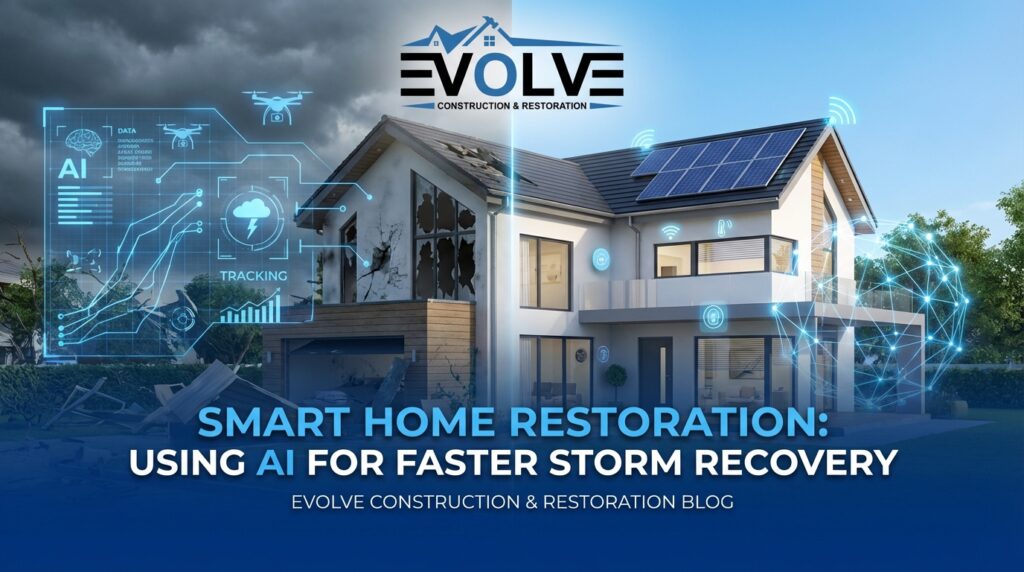
The aftermath of a major storm is often defined by a frantic race against time. For decades, homeowners and restoration professionals have relied on manual inspections, paper-based insurance claims, and anecdotal evidence to begin the rebuilding process. However, the emergence of Smart Home Restoration and Artificial Intelligence (AI) is fundamentally shifting this landscape. By leveraging advanced algorithms and interconnected devices, the industry is moving away from reactive chaos toward a streamlined, data-driven recovery model that prioritizes speed and precision.
How does AI accelerate storm recovery? AI accelerates storm recovery by automating damage assessment through drone imagery, streamlining insurance claims with computer vision, and predicting resource needs via big data analytics. This technology reduces the gap between the storm event and the start of physical restoration from weeks to just days, significantly minimizing secondary damage like mold or structural decay.
In this comprehensive guide, we will explore how AI-powered tools are transforming every stage of the restoration lifecycle. From the moment a storm is detected by satellite sensors to the final nail driven into a resilient new roof, technology is ensuring that homeowners can return to their lives faster than ever before. We will also delve into the critical role of IoT sensors and the ethical considerations of using high-resolution data in private residential spaces.
1. The New First Responders: AI-Driven Rapid Damage Assessment
In the immediate wake of a hurricane, tornado, or hailstorm, the first challenge is simply understanding the extent of the damage. Traditionally, this required adjusters and contractors to physically travel to affected areas, often navigating blocked roads and hazardous conditions. Today, AI-driven remote sensing has become the new “first responder.” High-resolution satellite imagery and fleets of autonomous drones can now map entire neighborhoods within hours of the clouds clearing, providing a macro-scale view of the destruction that was previously impossible to obtain so quickly.
Computer vision, a subset of AI that trains computers to interpret and understand the visual world, plays a pivotal role here. When a drone flies over a residential street, AI algorithms can automatically identify missing shingles, cracked tiles, or fallen trees with a high degree of accuracy. This eliminates the need for a human to manually review thousands of photos. Instead, the AI generates a prioritized list of properties requiring urgent attention, allowing restoration teams to deploy their resources where they are needed most critically.
This rapid assessment isn’t just about speed; it’s about safety. By using drones equipped with thermal imaging and AI, contractors can identify structural weaknesses or hidden moisture pockets that are invisible to the naked eye. This preventatively identifies potential collapses or electrical hazards before a human worker even sets foot on the property. As Smart Home Restoration matures, these aerial insights will be integrated directly into the initial project estimates, reducing the time spent on preliminary paperwork.
2. Bridging the Gap: Integrating Smart Home IoT with Restoration Platforms
While satellites and drones provide an external view, the true power of a modern recovery lies inside the house. The Internet of Things (IoT) has introduced a web of sensors into the modern home—from smart leak detectors under the kitchen sink to structural health monitors embedded in the attic. During a storm, these devices act as silent sentinels, recording data in real-time. If a roof fails and water begins to ingress, a smart sensor can immediately alert the homeowner and, in some cases, automatically trigger a service request to a restoration partner.
The integration of these IoT devices with professional restoration platforms creates a seamless flow of information. For example, if a basement flood sensor detects rising water levels during a surge, the AI platform can estimate the volume of water and the necessary equipment (such as industrial dehumidifiers and pumps) required for mitigation. This allows contractors to arrive on-site with the exact tools needed, rather than performing a separate inspection visit first. This level of connectivity is the hallmark of effective Smart Home Restoration.
Furthermore, smart electrical panels can provide data on power surges or circuit failures during a storm. This data is invaluable for diagnosing potential fire hazards caused by water hitting electrical systems. By analyzing the history of these sensor triggers, AI can help restoration professionals understand the exact sequence of events during the storm, which is crucial for both the physical repair process and the subsequent insurance investigations. This granular data turns the home itself into an active participant in its own recovery.
3. Documentation at the Speed of Light: AI-Powered Insurance Claims
One of the most significant bottlenecks in storm recovery is the insurance claim process. Traditionally, homeowners had to wait days or weeks for an adjuster to visit, document the damage, and process the paperwork. AI is radically transforming this experience through automated claims processing. Mobile applications now allow homeowners to take photos of the damage, which are then analyzed by AI to verify the claim against the policy’s coverage limits almost instantaneously. This “instant triage” helps move the project from the “pending” pile to the “active” pile in a fraction of the time.
The use of AI in claims also reduces human error and subjectivity. An AI model trained on millions of images of hail damage can distinguish between a natural wear-and-tear spot and a legitimate storm strike with scientific precision. For the homeowner, this means fewer disputes with insurance companies and more transparent outcomes. For the restoration contractor, it means faster approvals for necessary repairs, ensuring that the home is protected from further weather exposure as quickly as possible.
Beyond simple photo analysis, AI-powered Natural Language Processing (NLP) is being used to read and interpret complex insurance policies for the homeowner. These tools can highlight specific clauses, such as “additional living expenses” or “code upgrade coverage,” that the homeowner might have missed. By empowering the consumer with data, AI ensures a more equitable recovery process where the homeowner is fully aware of their rights and the resources available to them under their specific policy.
4. Predictive Recovery: How AI Optimizes Supply Chains and Dispatching
Storm recovery is often hampered by logistics. When a massive hailstorm hits a metropolitan area, the demand for roofing materials, siding, and skilled labor skyrockets overnight, leading to shortages and long wait times. Predictive analytics, a branch of AI that uses historical data to forecast future events, is now being used to anticipate these surges. By analyzing weather patterns and the local housing stock, AI can predict which neighborhoods will be hit hardest and what types of materials will be in highest demand before the storm even arrives.
This allows restoration companies and suppliers to pre-stage materials and optimize their supply chains. If the AI predicts a high likelihood of roof damage in a specific region, distributors can move shingles and underlayment to local warehouses in advance. Similarly, AI-driven scheduling software can optimize the routing of restoration crews, ensuring that teams are dispatched to clusters of damaged homes to minimize travel time and maximize the number of properties stabilized each day.
Resource optimization also extends to specialized equipment. Drying out a water-damaged home requires high-end dehumidifiers and air movers that are often in short supply during regional disasters. AI tracking systems can manage the inventory of these assets across multiple job sites, ensuring that equipment is moved to a new location the moment its task is complete. This logistical precision is critical in Smart Home Restoration, where every hour saved prevents further property degradation.
5. The Homeowner’s AI Toolkit: Self-Assessment and Safety
While waiting for professional help to arrive, homeowners can now use consumer-grade AI tools to perform their own initial safety checks. Large Language Models (LLMs) and visual recognition apps can guide a resident through a structured walkthrough of their property. For instance, a homeowner can upload a photo of a suspicious crack in a load-bearing wall, and an AI-powered app can provide an immediate (though preliminary) assessment of whether the area is safe to enter or if it requires professional shoring.
These tools can also provide customized “first-aid” steps for the home. If an AI identifies a specific type of water intrusion from a photo, it can instruct the homeowner on how to safely shut off the main water valve or which electrical breakers to trip to prevent a fire. This immediate guidance can be the difference between a manageable repair and a total loss. However, it is vital to remember that AI tools should complement, not replace, the expertise of licensed professionals like those at Evolve Construction.
To help you navigate the immediate aftermath of a storm, we have developed this AI-Enhanced Post-Storm Safety Checklist:
- Visual Documentation: Use your smartphone to take 360-degree photos of every room. Use AI photo apps to tag damage automatically.
- Smart Sensor Check: Review logs from your smart home hub (leaks, humidity, power) to identify hidden issues.
- AI Triage: Use a reputable vision AI tool to identify potentially hazardous debris or structural shifts before approaching.
- Instant Claim Initiation: Upload photos to your insurer’s AI portal immediately to secure your place in the queue.
- Resource Search: Use AI search tools to find the highest-rated local restoration experts with specific storm-damage experience.
6. Beyond Repair: Leveraging AI to ‘Build Back Smarter’
Restoration is not just about returning a home to its pre-storm state; it is an opportunity to improve its resilience for the future. The concept of “Building Back Smarter” involves using AI and modern engineering to ensure that the next storm doesn’t cause the same level of damage. During the rebuild phase, AI can be used to simulate different architectural upgrades. For example, generative design AI can suggest roof shapes or material combinations that are mathematically optimized to withstand the wind speeds typical of the local climate.
Homeowners are increasingly opting to install AI-governed power systems during the restoration process. These systems, such as smart solar arrays and battery backups, use machine learning to manage energy consumption during a grid failure. If the AI detects a coming storm, it can automatically charge the house’s batteries to 100% and prioritize power to essential systems like refrigeration and medical equipment. This digital resilience is a core component of modern Smart Home Restoration.
Additionally, the restoration phase is the ideal time to install permanent IoT monitoring systems. By embedding moisture sensors behind new drywall or installing smart shut-off valves on the main water line, homeowners can ensure that any future leaks are caught within seconds. AI software can then monitor these sensors over the long term, identifying tiny anomalies in structural movement or humidity that might indicate a slow-developing problem before it becomes a catastrophe.
7. Navigating the Risks: Privacy, Accuracy, and Ethical AI
As with any technological revolution, the rise of AI in storm recovery brings significant ethical and privacy concerns. The use of high-resolution drones and satellites means that detailed imagery of private property is being captured and stored. Who owns this data? Can an insurance company use a drone photo taken during a storm recovery to justify a premium hike for an unrelated issue, like an old trampoline or an unpermitted deck? These are the questions that homeowners and regulators must grapple with as Smart Home Restoration expands.
There is also the risk of “AI Hallucinations” or inaccuracies. If an automated claims algorithm incorrectly identifies a shadow as a hole in the roof, or conversely, misses actual structural damage due to a glare, the homeowner could be left with an inadequate settlement. It is crucial for the industry to maintain a “human-in-the-loop” philosophy, where AI handles the heavy lifting of data processing but a qualified human professional makes the final determination on safety and claim value.
Furthermore, we must address the potential for algorithmic bias. If AI models are trained primarily on data from certain types of neighborhoods or architectural styles, they may be less accurate when assessing homes in diverse or older communities. Ensuring that AI tools are inclusive and transparent is essential for maintaining public trust in the restoration process. At Evolve Construction, we advocate for the ethical use of technology that prioritizes the homeowner’s privacy and peace of mind.
8. The Economic Impact: Reducing Costs Through AI Efficiency
The long-term promise of AI in storm recovery is a reduction in the overall cost of disaster management. By identifying damage earlier and starting repairs faster, we can prevent the “cascading failures” that drive up costs. For instance, a small roof leak that is identified by a smart sensor within hours of a storm might cost $500 to patch. If that same leak goes unnoticed for three weeks while waiting for a manual inspection, it can lead to extensive mold growth and structural rot, costing upwards of $50,000 to remediate.
These efficiencies also benefit the insurance industry and, by extension, the consumer. When claims are processed faster and with more accuracy, the administrative overhead for insurers drops significantly. In theory, these savings can be passed down to homeowners in the form of more stable premiums, even in areas prone to frequent storms. AI-driven Smart Home Restoration is not just a technological luxury; it is becoming an economic necessity in an era of increasing weather volatility.
Finally, the use of AI in meeting FEMA compliance and federal audit requirements ensures that communities can access government aid more quickly. AI can automatically generate the rigorous documentation and data sets required for federal reimbursement, helping cities and individuals rebuild their infrastructure without the crippling delays of traditional bureaucracy. By streamlining the flow of capital and labor, AI acts as a catalyst for local economic resilience after a disaster.
Conclusion: The Future of Fully Autonomous Storm Recovery
We are rapidly approaching a future where the restoration process could be almost entirely autonomous. Imagine a scenario where, within minutes of a storm passing, a drone is automatically dispatched to your home. It identifies a damaged section of your roof, coordinates with your smart home hub to check for internal leaks, and sends a pre-verified claim to your insurance company. By the time you wake up the next morning, a contractor has already been scheduled, and the necessary materials have been ordered from a local warehouse.
This vision of Smart Home Restoration is no longer science fiction; the building blocks are already in place. As AI continues to evolve, the focus will shift from simple damage detection to complex, predictive management. However, the most important element of any recovery will always be the human touch—the honesty, empathy, and expertise that a local partner brings to a family in distress. Technology is the tool, but rebuilding a community is a human endeavor.
If your property has been affected by a storm, don’t navigate the recovery alone. Whether you’re dealing with hail damage to your roof or internal water issues, leveraging professional expertise alongside the latest technology is the surest way to protect your investment and your family. Reach out to specialists who understand the intersection of craftsmanship and modern innovation to ensure your home is built back stronger than ever.
Ready to Get Started?
Our honest, friendly, and reputable professionals help homeowners and businesses maximize the value of their property and stand together with them to rebuild for a better tomorrow, especially after challenging storm events.