When most homeowners look up at their houses, they see the shingles, the siding, and perhaps the gutters. However, nestled just beneath the eaves are two of the most critical components of a high-performing roofing system: the soffit and fascia. While they are often viewed as purely aesthetic finishing touches that hide the rafter tails, their functional role in attic ventilation and structural protection is unparalleled. Without a properly functioning soffit and fascia system, even the most expensive shingles on the market are destined for a shortened lifespan and a host of moisture-related issues.
At Evolve Construction, we believe that a roof is only as strong as its weakest link. Many roofing contractors focus solely on the surface, but the health of your home starts with the airflow beneath the deck. Understanding how these components work together to create a “breathing” roof is essential for any homeowner looking to protect their investment and ensure long-term comfort. In this comprehensive guide, we will break down the science of roof ventilation and why the soffit and fascia are the unsung heroes of your home’s exterior.
Anatomy of the Roofline: Defining Soffit and Fascia
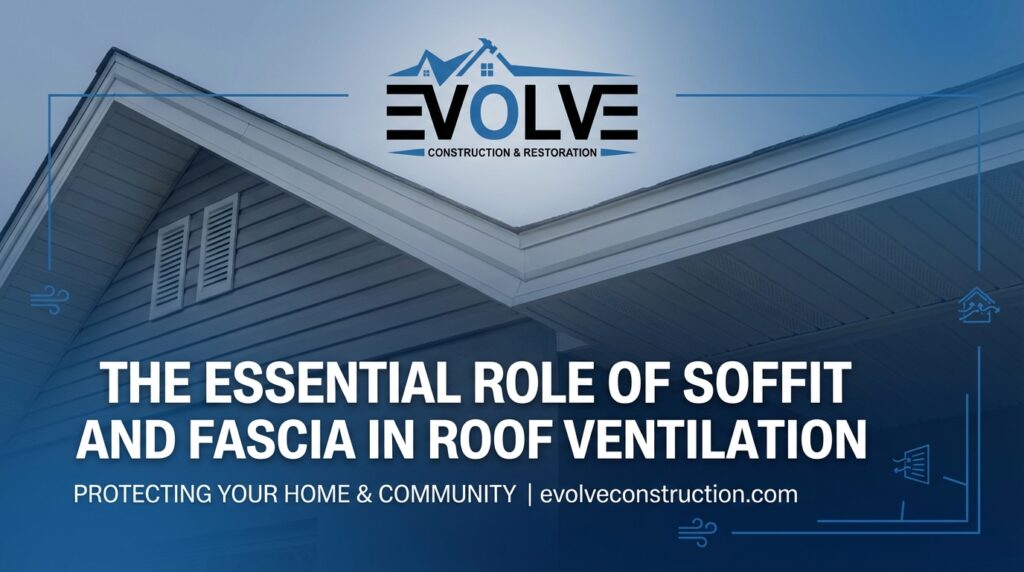
Before diving into the mechanics of airflow, it is important to define exactly what these components are. The fascia is the attractive board that runs along the lower edge of the roof. It is fixed directly to the lower ends of the roof trusses and usually supports all of the guttering. Visually, the fascia acts as a trim that gives the roofline a finished, clean look. Practically, it acts as the primary barrier between the edge of the roof and the elements, preventing water from seeping into the wooden structure of the roof.
What is the Soffit?
The soffit is the exposed surface underneath the overhanging section of a roof eave. If you stand directly under your gutters and look straight up, you are looking at the soffit. Its primary job, aside from aesthetics, is to provide a point of entry for fresh air into the attic space. Soffits can be solid or perforated (vented). In a modern, well-ventilated home, perforated soffit panels allow cool, dry air to enter the attic, which is the first step in the continuous cycle of roof ventilation.
Common Materials Used
Soffit and fascia are typically constructed from wood, vinyl, or aluminum. While wood offers a classic look, it is highly susceptible to rot if moisture finds a way behind the paint. Vinyl and aluminum have become the industry standard because they are low-maintenance, resistant to rot, and can be manufactured with built-in ventilation holes. At Evolve Construction, we often recommend high-quality aluminum or vinyl systems that stand up to the rigors of seasonal weather changes without warping or degrading.
The Science of Airflow: How Soffit and Fascia Create a Breathing Roof
The principle behind roof ventilation is rooted in simple physics: the Stack Effect. Because warm air is less dense than cool air, it naturally rises. In a properly designed attic, warm, moist air rises toward the peak of the roof (the exhaust). However, for this air to leave the attic, it must be replaced by an equal amount of cooler air entering from the bottom. This is where the soffit comes into play, acting as the “intake” for the entire system.
Convection and Thermal Buoyancy
In the summer, the sun beats down on your shingles, heating the air in the attic to temperatures that can exceed 150°F. Without intake from the soffits, this heat becomes trapped, baking your shingles from the inside out and forcing your air conditioning system to work overtime. Through thermal buoyancy, the hot air escapes through ridge vents or gable vents, creating a low-pressure zone that pulls fresh, cooler air through the soffit vents. This constant cycle keeps the attic temperature closer to the ambient outdoor temperature.
Passive vs. Active Ventilation
Most soffit and fascia systems are part of a passive ventilation strategy, meaning they rely on natural air pressure and heat rise rather than mechanical fans. However, even in homes with active ventilation (powered attic fans), the soffit remains the critical intake point. If you have a powerful fan pulling air out but no clear path for air to enter through the soffits, the fan may end up pulling conditioned air from your living space through light fixtures and ceiling cracks, leading to significantly higher utility bills.
Intake vs. Exhaust: Why Your Attic Needs a Balanced System
A common mistake in home construction is focusing only on the exhaust. Homeowners often install large ridge vents or multiple turbine vents but neglect the intake at the eaves. A balanced system requires a 50/50 split between intake (soffits) and exhaust (ridge or static vents). If this balance is off, the system cannot function effectively, leading to stagnant air pockets where moisture and heat can accumulate.
The Danger of the “Short-Circuit” Effect
One of the most nuanced aspects of ventilation is the risk of short-circuiting. This occurs when multiple types of exhaust vents are used—for example, mixing a ridge vent with a gable vent. The ridge vent may begin pulling air from the nearby gable vent instead of the distant soffit vents. This leaves the lower portions of the attic unventilated and moist. Ensuring that your soffits are the primary and only source of intake is vital for maintaining a consistent flow across the entire underside of the roof deck.
Optimal Vent Placement
For the best results, soffit vents should be installed continuously along the eaves. This ensures that every rafter bay receives a fresh stream of air. If vents are only placed every few feet, “dead zones” can form between the vents, allowing localized heat and moisture to damage specific sections of the roof deck. Our team at Evolve Construction meticulously calculates the necessary vent area to ensure every square inch of your attic remains part of the active airflow cycle.
5 Critical Benefits: Beyond Just Curb Appeal
While soffit and fascia certainly make a home look complete, their primary benefits are structural and financial. First and foremost is moisture and mold prevention. In the winter, warm air from your home carries humidity into the attic. If this moisture isn’t swept away by airflow from the soffits, it condenses on the cold underside of the roof deck, leading to wood rot and hazardous mold growth that can affect your family’s health.
Prevention of Ice Dams
In colder climates, proper soffit ventilation is the primary defense against ice dams. Ice dams form when heat escaping from the living space melts snow on the upper part of the roof. The water runs down to the cooler eaves and refreezes, creating a dam that forces water back up under the shingles. By keeping the entire roof deck at a uniform temperature via soffit intake, the snow melts evenly, preventing the freeze-thaw cycle that leads to costly interior water damage.
Energy Efficiency and Shingle Life
A well-ventilated attic significantly reduces the load on your HVAC system during the summer months. When the attic is cool, heat doesn’t radiate down through the ceiling into your bedrooms. Furthermore, shingle manufacturers like GAF require specific ventilation standards to honor their warranties. Excessive heat buildup from poor soffit intake can cause shingles to curl, crack, and lose granules prematurely, effectively voiding your protection.
Calculating Your Needs: A Homeowner’s Guide to the 1:300 Ventilation Rule
How do you know if you have enough soffit ventilation? The industry standard is known as the 1:300 rule. This rule states that for every 300 square feet of attic floor space, you need at least 1 square foot of Net Free Area (NFA) for ventilation. If your attic is 1,500 square feet, you need 5 square feet of total ventilation, ideally split into 2.5 square feet of intake and 2.5 square feet of exhaust.
Understanding Net Free Area (NFA)
It is important to note that the physical size of a vent is not its NFA. Because vents have grates, screens, or louvers to keep out pests, the actual space through which air can move is smaller than the frame. For example, a perforated soffit panel might only provide 50% of its total area as actual airflow space. At Evolve Construction, we perform these technical calculations during our inspections to ensure your home meets or exceeds local building codes and manufacturer specifications.
The Impact of Attic Insulation
Calculating the area is only half the battle; the air must also have a clear path. Many homeowners add extra insulation to save on heating costs, only to inadvertently block the soffit vents. This effectively chokes the roof. When we inspect a home, we look for both the mathematical NFA and the physical clearance to ensure the numbers on paper translate to real-world performance.
Modern Ventilation Innovations: Hidden Vents and Over-Fascia Intake
Not every home is built with wide, traditional eaves. Many modern architectural styles or older “Cape Cod” homes have very narrow overhangs or no overhangs at all, making standard soffit vents impossible to install. Fortunately, roofing technology has evolved to provide over-fascia vents and vented drip edges. These systems sit discreetly at the gutter line, allowing air to enter through the fascia itself without sacrificing the home’s sleek profile.
Hidden Soffit Systems
For homeowners who dislike the look of traditional perforated panels, “hidden” soffit systems provide a solution. These panels use small, recessed channels between the slats to provide airflow, making the vents nearly invisible from the street. This allows for maximum ventilation while maintaining a high-end, solid-wood aesthetic. These are particularly popular in upscale residential projects where curb appeal is a top priority.
Performance Comparison: Perforated vs. Individual Pods
There is often a debate between using continuous perforated panels and individual vent “pods” installed every few feet. Data-driven testing shows that continuous panels provide much more uniform airflow and prevent the stagnant air pockets mentioned earlier. While individual pods are often cheaper to install, they rarely provide the consistent NFA required for larger attics. At Evolve, we prioritize the long-term health of the roof, which usually means recommending continuous ventilation systems.
The Role of Baffles: Ensuring Insulation Doesn’t Choke Your Air Supply
Even the best-installed soffit vents are useless if they are blocked by fiberglass or cellulose insulation. This is a incredibly common issue in older homes where insulation has settled or been added haphazardly. To solve this, professional roofers install attic baffles (also known as rafter vents). These are plastic or foam channels that are stapled directly to the roof rafters, creating a clear tunnel for air to travel from the soffit, over the insulation, and into the main attic space.
Proper Baffle Installation
Baffles should be installed in every rafter bay that contains a soffit vent. They should extend from the top of the wall plate well above the highest point of the insulation. If the baffles are too short, blown-in insulation can still tumble over the top and clog the vent. During our restoration and roofing projects, Evolve Construction crews check for these baffles to ensure the ventilation work we do isn’t undermined by the insulation system.
The Link Between Baffles and Mold
Blocked vents at the eaves are the #1 cause of “localized mold”—mold that appears only in the corners of the attic near the gutters. Without baffles, the air at the perimeter of the attic stays perfectly still. This stagnant air traps moisture against the cold wood, creating a petri dish for spores. Ensuring your baffles are clear is just as important as the shingles themselves when it comes to maintaining a healthy home environment.
Red Flags: Common Signs Your Soffit or Fascia is Failing Its Job
How can you tell if your soffit and fascia need attention? One of the most obvious signs is peeling paint or orange-colored rot on the fascia boards. This indicates that water is getting behind the gutters or that the wood is staying perpetually damp. Another red flag is the presence of pests and rodents. Bees, wasps, squirrels, and birds love to nest in the gaps created by rotting fascia or loose soffit panels. If you hear scratching in your attic, your roofline is likely compromised.
Visual Signs of Poor Ventilation
Look for “tiger stripping” or dark stains on your gutters, which can indicate water is overflowing and running back onto the fascia. Inside the attic, look for rusted nails or dark water stains on the plywood. This is often a sign of condensation caused by poor airflow. If you notice your home is significantly hotter in the upstairs bedrooms than the downstairs, or if your cooling bills have spiked unexpectedly, your soffit vents might be clogged with dust, paint, or debris.
The Winter Warning: Ice Dams
If you see large icicles forming along your gutters in the winter, it’s not just a festive decoration—it’s a warning. While some icicles are normal, large formations coupled with ice buildup on the roof are a direct indicator that your attic is too warm. This heat imbalance is almost always caused by inadequate intake through the soffits, preventing the cool outdoor air from buffering the roof temperature.
Professional vs. DIY: When to Call a Roofer for Soffit and Fascia Repairs
Many homeowners consider soffit and fascia repair to be a simple weekend project. However, working at the edge of a roof is inherently dangerous and requires specialized equipment. Furthermore, improperly installing these components can lead to hidden water damage that isn’t discovered for years. A professional roofer understands how to integrate the fascia with the drip edge and the gutter system to ensure water is shed away from the house, not into it.
Warranty and Insurance Implications
This is where the difference between a “chuck-in-a-truck” contractor and a reputable company like Evolve Construction becomes clear. Many roofing manufacturers, such as GAF, offer enhanced warranties like the Golden Pledge. These warranties are only valid if the entire system—including ventilation—is installed by a certified contractor to strict standards. A DIY repair or a cut-rate contractor could accidentally void your shingle warranty by failing to provide adequate Net Free Area.
The Evolve Difference
At Evolve Construction, we back our work with a 100% Satisfaction Guarantee. Because we are a large, established company with physical headquarters and deep roots in the community, we will be there to honor our warranties long after the storm has passed. We don’t just fix the surface; we evaluate the entire ecosystem of your roof to ensure your soffit and fascia are performing their vital roles in ventilation and protection.
Conclusion: Protecting Your Investment from the Inside Out
The role of soffit and fascia in roof ventilation cannot be overstated. These components are the lungs of your home, allowing it to breathe and shed the heat and moisture that would otherwise destroy it. By maintaining a balanced intake and exhaust system, you protect your shingles, lower your energy costs, and prevent the growth of mold and rot. While they may seem like small details, they are fundamental to the structural integrity of your property.
Don’t wait until you see a leak or smell mold to check your ventilation. Whether you’re recovering from a major storm or simply looking to improve your home’s efficiency, a professional inspection of your roofline is a wise investment. At Evolve Construction, we stand together with our clients to rebuild for a better tomorrow, ensuring every home we touch is as beautiful as it is durable.
Ready to Protect Your Home?
Our honest, friendly, and reputable professionals help homeowners and businesses maximize the value of their property and stand together with them to rebuild for a better tomorrow, especially after challenging storm events. Whether you need a ventilation audit or a full roof replacement, Evolve is here to help.