Commercial Roof Maintenance: The Ultimate Guide to Extending TPO Lifespan
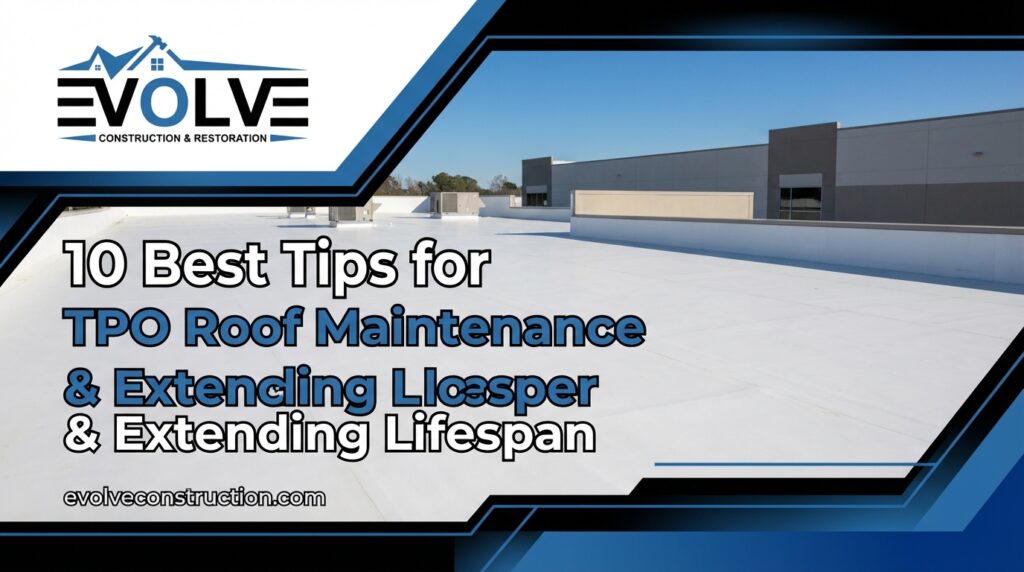
How can you extend the lifespan of a TPO roof? Regular TPO roof maintenance involves a proactive strategy including biannual inspections (Spring and Fall), professional cleaning to preserve solar reflectivity, immediate repair of compromised heat-welded seams, and maintaining clear drainage systems. By implementing a consistent maintenance program, commercial property managers can extend a TPO membrane’s service life from the standard 15-20 years to well over 30 years, significantly reducing the total cost of ownership.
1. Introduction: The Economic Case for TPO Maintenance
For many commercial property owners, the roof is an “out of sight, out of mind” asset until a leak disrupts operations. However, Thermoplastic Polyolefin (TPO) systems represent a significant capital investment that requires active management to reach its full potential. The economic case for TPO roof maintenance is undeniable: the cost of a biannual maintenance program is a fraction of the cost of premature roof replacement. When a TPO system fails early, it is rarely due to a defect in the material itself, but rather a lack of oversight regarding environmental stressors and minor mechanical issues that escalate over time.
The ROI of Proactive Management
Studies by the National Roofing Contractors Association (NRCA) suggest that a proactively maintained roof can last up to 50% longer than a reactive one. In the context of TPO, this means potentially adding a decade of service life. This longevity translates directly to better bottom-line performance, as it allows businesses to defer the massive expense of a full tear-off and replacement while maintaining lower energy bills through the membrane’s high reflectivity.
Protecting Your Building’s Interior Assets
Beyond the roof itself, maintenance protects what is underneath. Commercial buildings often house millions of dollars in inventory, data servers, and machinery. A single undetected leak in a TPO seam can lead to mold growth, structural rot, and damaged equipment. By investing in regular upkeep, you are not just maintaining a membrane; you are insuring the operational continuity of your entire business against the elements.
2. The Science of TPO Aging: Understanding UV, Heat, and Chemical Stress
To effectively maintain a TPO roof, one must understand how it degrades. TPO is a blend of polypropylene and ethylene-propylene rubber, often reinforced with polyester scrim. While it is engineered for durability, it is not invincible. The primary drivers of TPO aging are ultraviolet (UV) radiation and thermal loading. Over years of exposure, UV rays can break down the polymer chains in the top layer of the membrane, leading to a process known as erosion, where the thickness of the weathering layer decreases.
The Impact of Thermal Shock
Thermal shock occurs when a roof undergoes rapid temperature fluctuations—such as a hot summer afternoon followed by a sudden cold thunderstorm. TPO membranes expand and contract with these changes. While TPO is flexible, constant “cycling” puts immense pressure on the heat-welded seams and flashing details. Over time, this can lead to microscopic stress cracks or the weakening of the bond between the membrane and the substrate, especially if the original installation didn’t account for sufficient movement.
Chemical Degradation and Industrial Exhaust
Not all TPO damage comes from the sun. Many commercial buildings, particularly restaurants or manufacturing facilities, vent oils, greases, and industrial chemicals onto the roof surface. TPO is generally resistant to many chemicals, but prolonged exposure to animal fats or certain solvents can soften the membrane, causing it to swell or lose its physical integrity. Identifying these localized stress zones during maintenance is critical for preventing localized failures that could compromise the entire system.
3. Developing a Proactive Inspection Schedule (Spring, Fall, and Post-Storm)
A robust commercial roof maintenance plan is built on the foundation of scheduled inspections. At Evolve Construction, we recommend a minimum of two comprehensive inspections per year. The Spring inspection identifies any damage caused by winter freeze-thaw cycles or snow removal efforts. The Fall inspection prepares the roof for the coming winter by ensuring all drainage paths are clear and any summer UV damage is addressed before temperatures drop.
The Post-Storm Assessment Protocol
In addition to seasonal checks, emergency inspections after major weather events are mandatory. High winds can cause uplift at the edges, and hail can cause micro-fractures in the TPO weathering layer. At Evolve Construction, we specialize in storm damage restoration, helping owners identify subtle signs of damage that might be missed by an untrained eye but would lead to major leaks within 6 to 12 months.
Creating a Visual History
Every inspection should be documented with high-resolution photography and a detailed site map. This documentation creates a “medical record” for your roof. By tracking the progression of minor issues—like a slightly backed-out fastener or a small area of surface crazing—you can accurately predict when repairs will be needed and avoid the high costs of emergency call-outs. This history is also invaluable when filing insurance claims after a catastrophic storm event.
4. Safe Cleaning Protocols: Preserving Reflectivity without Damaging the Membrane
One of TPO’s greatest benefits is its high Solar Reflectance Index (SRI), which keeps buildings cool and reduces energy costs. However, dirt, soot, and biological growth can quickly darken the membrane, negating these benefits. Cleaning is an essential part of TPO roof maintenance, but it must be done correctly to avoid damaging the polymer structure. Using the wrong chemicals or excessive pressure can do more harm than good.
The Dangers of High-Pressure Washing
Many property managers make the mistake of using industrial-strength pressure washers to clean TPO. High pressure (exceeding 2,000 PSI) can actually erode the top weathering layer or force water into the seams, potentially causing delamination. The safest method is a low-pressure wash, often referred to as a “soft wash,” which uses volume rather than force to lift contaminants away from the surface.
Approved Cleaning Agents
Avoid harsh solvents, bleach, or citrus-based cleaners unless specifically approved by the manufacturer. Most TPO membranes respond best to a simple mixture of mild non-abrasive household detergent and water. For stubborn organic growth like algae or moss, specialized biocides that are pH-neutral are the preferred choice. Always rinse the roof thoroughly to ensure no soapy residue remains, as this can become slippery and potentially attract more dirt in the future.
5. The Drainage Audit: Eliminating Ponding Water and Protecting the Substrate
Ponding water—defined as water that remains on a roof for more than 48 hours after a rain event—is the enemy of TPO longevity. While TPO is highly resistant to water, standing water acts as a magnifying glass for UV rays, accelerating the degradation of the membrane in that specific area. Furthermore, the weight of ponding water can cause the roof deck to deflect, creating even deeper pools and putting immense stress on the structural components of the building.
Clearing Drains, Scuppers, and Gutters
A primary goal of maintenance is ensuring that water has an unobstructed path off the roof. Debris like leaves, plastic bags, and bird nests frequently clog primary drains and scuppers. During every maintenance visit, these areas should be manually cleared. We also recommend checking the strainers and leaf guards; if they are damaged or missing, small debris can enter the internal piping, leading to much more expensive plumbing issues deep within the building structure.
Assessing Slope and Substrate Integrity
If ponding persists despite clear drains, it may indicate a structural issue or compressed insulation underneath the membrane. During a maintenance audit, Evolve professionals look for “spongy” areas. This often indicates that water has already bypassed the TPO layer and is saturating the polyisocyanurate (ISO) board below. Catching these areas early allows for localized repairs before the moisture spreads and necessitates a full roof recovery.
6. Critical Points of Failure: Detailed Guide to Seams, Flashings, and Penetrations
TPO membranes themselves rarely fail in the middle of a field sheet; the vast majority of leaks occur at the edges, seams, and penetrations. These are the “critical points” where the human element of installation and the physical laws of thermal expansion meet. Effective TPO roof maintenance requires a microscopic focus on these transition zones, looking for signs of fatigue before they become open gaps.
Probing Heat-Welded Seams
TPO sheets are joined using hot-air welders that create a monolithic bond. However, “cold welds” (where the heat wasn’t sufficient during installation) can eventually separate. Technicians use a blunt-nosed probe to manually check the integrity of every foot of seam. We look for “fishmouths”—small openings where the top sheet has curled back. Even a gap the size of a pinhead can allow capillary action to draw water under the membrane.
Inspecting Pitch Pockets and Pipe Boots
Every HVAC unit, vent pipe, and conduit represents a hole in your roof’s armor. These penetrations are sealed with TPO boots or pitch pockets filled with sealant. Over time, the sealant in pitch pockets can dry out and crack (alligatoring). Maintenance involves topping off these sealants and ensuring that stainless steel draw bands around pipes are tight. Without this upkeep, these penetrations become the most common entry points for water during heavy rain.
7. Mitigating Mechanical Damage: Walkway Pads and Rooftop Equipment Management
A significant portion of TPO damage is man-made. HVAC technicians, window washers, and solar installers often inadvertently damage the membrane by dropping tools, dragging heavy equipment, or spilling oils. While TPO is puncture-resistant, it is not puncture-proof. Managing foot traffic and protecting high-use areas is a vital, yet often overlooked, component of extending your roof’s lifespan.
The Importance of Walkway Pads
Walkway pads are sacrificial layers of thick, textured TPO or recycled rubber that are welded directly onto the main membrane. They should be installed in all high-traffic areas, specifically around HVAC units that require regular service and near all roof hatches. If your current TPO system lacks these, adding them during a maintenance cycle is one of the most cost-effective ways to prevent accidental punctures and prolong the system’s life.
Managing Equipment Vibration and Supports
Large rooftop units (RTUs) vibrate during operation. If these units are not properly supported on rubber isolation pads or structural curbs, that vibration can cause the equipment to “walk” or grind into the TPO membrane. During a maintenance audit, we check all equipment supports (sleeper ducts, gas line stands) to ensure they are properly cushioned and haven’t shifted. This prevents mechanical abrasion that can wear a hole through the membrane over several years.
8. Advanced Restoration: Using Reflective Coatings to Add 10+ Years of Life
As a TPO roof nears the end of its manufacturer-specified lifespan (usually around year 15-20), owners often think replacement is the only option. However, if the underlying insulation is dry and the membrane is still structurally sound, a reflective roof coating can be a game-changer. Restoration is often 50-70% cheaper than a full replacement and can be classified as a maintenance expense rather than a capital improvement for tax purposes.
Silicone vs. Acrylic Coatings
Ponding Resistance
Excellent (won’t degrade)
Poor (can re-emulsify)
UV Protection
Superior Longevity
Good (requires more thickness)
Adhesion to TPO
Requires specific primer
Good with proper prep
The Sustainability Factor
Restoring a TPO roof is a major win for sustainability. It prevents thousands of pounds of old roofing material from entering landfills and reduces the carbon footprint associated with manufacturing and transporting new membrane. By applying a high-solids silicone coating, you create a seamless, waterproof barrier that reflects up to 88% of solar heat, significantly lowering the building’s cooling load and the urban heat island effect.
9. The Role of Technology: Infrared Scans and Electronic Leak Detection
Modern TPO roof maintenance has moved beyond simple visual inspections. At Evolve Construction, we utilize advanced diagnostic tools to see what the human eye cannot. These technologies allow us to find “invisible” problems before they manifest as ceiling drips, saving property managers thousands in potential interior damage and structural repairs.
Infrared Thermography for Moisture Detection
Infrared cameras detect temperature differences on the roof surface. After the sun goes down, dry insulation cools quickly, while wet insulation retains heat. By performing a moisture scan, we can pinpoint exactly where water has infiltrated the system. This allows for “surgical” repairs—replacing only the wet sections of insulation and patching the membrane—rather than assuming the whole roof is compromised. It is the difference between a minor bandage and major surgery.
Electronic Leak Detection (ELD)
For TPO systems with conductive substrates, ELD uses low-voltage electricity to find breaches in the membrane. Water is a conductor, and if there is a hole, the electric current will follow the water path to the grounded deck. This technology is incredibly precise, capable of finding a puncture the size of a needle tip. It is particularly useful for complex roofs with many penetrations or for verifying the integrity of a new installation or restoration project.
10. Warranty Management: Why Documentation is Your Best Insurance Policy
One of the most misunderstood aspects of commercial roofing is the warranty. Many owners assume that a 20-year warranty is an unconditional guarantee. In reality, most manufacturer warranties—including the high-end GAF Golden Pledge—require the owner to perform regular maintenance to keep the coverage valid. If you cannot produce maintenance records when a claim is filed, the manufacturer may have the right to deny the claim, citing owner negligence.
The GAF Golden Pledge vs. Evolve’s 100% Satisfaction Guarantee
It is important to distinguish between the two types of protection. A manufacturer’s warranty, like the Golden Pledge, covers defects in the material and the labor to replace that material if it fails. Evolve’s “100% Satisfaction Guarantee” is our personal commitment to the quality of our workmanship and your experience as a client. While the manufacturer protects the product, Evolve protects the process and the relationship. We stand behind our installations because we know we followed every protocol to the letter.
The Value of a Permanent Physical Headquarters
In the wake of a major storm, “fly-by-night” contractors often flood an area, offering quick fixes and disappearing once the checks clear. These contractors won’t be there to honor a workmanship warranty five years later. Evolve Construction is a large, established company with a physical headquarters and deep roots in the community. When we provide a guarantee, it’s backed by a company that will be here for decades to come. We don’t just finish a job; we enter a long-term partnership to protect your asset.
11. Summary: The Lifecycle ROI of a Well-Maintained TPO System
In conclusion, TPO roof maintenance is not an optional expense; it is a critical strategy for asset preservation. By understanding the science of how TPO ages, following a strict inspection schedule, and utilizing modern restoration technologies, you can significantly extend the life of your commercial roof. This proactive approach saves money, reduces environmental impact, and provides peace of mind that your building—and the business within it—is protected from the elements.
Key Takeaways for Property Managers
- Schedule inspections every Spring and Fall, and immediately after any significant storm.
- Maintain detailed logs and photos to satisfy manufacturer warranty requirements.
- Prioritize drainage and the repair of heat-welded seams to prevent substrate saturation.
- Consider reflective coatings as a mid-life intervention to add 10+ years of service.
- Partner with an established, local roofing professional who has the resources to honor long-term guarantees.
At Evolve Construction, our mission is to build a better tomorrow by standing with our clients today. Whether you are recovering from a challenging storm event or looking to maximize the value of your property through a professional maintenance program, our team is here to provide honest, expert guidance every step of the way.
Ready to Get Started?
Our honest, friendly, and reputable professionals help homeowners and businesses maximize the value of their property and stand together with them to rebuild for a better tomorrow, especially after challenging storm events.